Achieving the continent’s climate and energy goals. Buildings are responsible for a significant share of energy consumption and greenhouse gas emissions, while many older structures also face challenges related to ageing materials, outdated systems and, in some regions, seismic vulnerability. Developing effective renovation strategies therefore requires more than analysing individual buildings. It requires a broader understanding of how building stocks are distributed, how they were constructed and how they perform across different countries and climatic conditions.
To support this objective, GreenRenoV8 has developed a harmonised building archetype framework covering five pilot countries: Greece, Italy, Belgium, Austria and Slovenia. Instead of attempting to model every building individually, the project created representative archetypes that reflect the most common characteristics of national building stocks while remaining suitable for large-scale analysis and renovation planning.
Creating a Common Language for Europe’s Buildings
One of the main challenges when analysing buildings across Europe is the diversity of construction traditions, regulations and available data. Buildings serving the same purpose can differ significantly from one country to another in terms of materials, construction techniques, thermal performance and structural systems.
To address this complexity, GreenRenoV8 established a common classification framework based on three key dimensions: the building sector, the building subsector and the construction period. This approach allowed the project to organise residential and non-residential buildings into comparable categories while still accounting for the historical and regulatory differences that shape national building stocks.
While building functions remained consistent across countries, age classifications were adapted to reflect national construction histories and data availability. This balance between harmonisation and flexibility ensured that the framework remained both comparable at European level and meaningful at local level.
Turning Data into Representative Archetypes
Once the building categories had been defined, the project gathered and organised information through a harmonised data collection framework. The objective was to capture not only the physical characteristics of buildings but also the factors that influence their energy performance and renovation potential.
The framework included information on building size, floor area, occupancy and distribution, alongside geometric characteristics such as building volume, height and external surfaces. Energy-related information covered heating, cooling, ventilation and domestic hot water systems, while thermal performance data described the behaviour of building envelopes and their components.
Particular attention was given to materials. Walls, roofs, floors and windows were characterised not only according to their thermal properties but also according to their material composition, creating a foundation for future environmental assessments and lifecycle analyses.
The result was a set of approximately thirty representative archetypes for each pilot country. This level of aggregation provides enough detail to capture meaningful differences between buildings while keeping simulation and modelling activities manageable.
Combining Energy Performance with Seismic Resilience
A key innovation of the GreenRenoV8 framework is its integration of both energy and seismic perspectives. Renovation decisions rarely affect a single aspect of a building. Improvements to insulation, heating systems or building envelopes often interact with structural performance and long-term resilience.
For this reason, the project incorporated seismic characterisation into the archetype development process. National hazard maps, regulatory frameworks and seismic zoning methodologies were used to ensure that structural considerations were reflected alongside energy-related parameters.
This approach is particularly important in countries such as Greece, Italy and Slovenia, where earthquake exposure remains a significant concern. By combining energy efficiency and structural resilience within the same framework, GreenRenoV8 supports a more comprehensive approach to renovation planning.
What We Learned from Comparing Five Countries
Developing harmonised archetypes across multiple countries also revealed several important lessons. One of the most significant challenges was the fragmentation of building data. No single source contained all the information required to characterise national building stocks. Instead, data had to be gathered from a variety of sources, including statistical databases, energy performance certificates, construction typologies and regulatory documents.
Another challenge concerned comparability. Concepts such as climate zones, energy classes and construction periods are often defined differently across countries. Rather than forcing direct equivalence, the project focused on harmonising the methodology itself while preserving national specificities.
This approach demonstrated that meaningful cross-country comparisons are possible without oversimplifying the diversity that characterises Europe’s buildings.
Figure 1 illustrates the distribution of building categories and age classes selected across the five pilot countries for the development of representative archetypes. The comparison highlights both common patterns and national differences within the European building stock. Residential building typologies appear consistently across countries and construction periods, reflecting their prevalence and the greater availability of data. Greater variability can be observed among certain non-residential categories and more recent construction periods, where national construction practices and data availability differ more significantly.
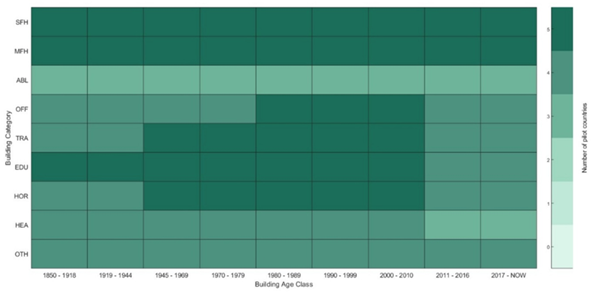
Figure 1. Cross-country selection of building categories and building age classes for the development of representative archetypes (developed by Alessandro Russo).
Supporting the Next Generation of Renovation Strategies
The archetype framework developed in GreenRenoV8 represents much more than a technical database. It provides a structured foundation for future renovation modelling, lifecycle environmental assessments and the development of renovation passports.
By bringing together information on building geometry, materials, technical systems, energy performance and seismic characteristics, the framework offers a more complete picture of Europe’s existing building stock. At the same time, it highlights the importance of accessible and interoperable building data for supporting evidence-based renovation strategies.
As Europe continues its transition towards a more sustainable and resilient built environment, methodologies such as the one developed in GreenRenoV8 will play an important role in helping decision-makers identify renovation pathways that are both effective and adaptable to local conditions.
Check out the full deliverable D2.1 Sustainable Renovation-Supporting Building Archetypes.
Discover more project outputs in the Resources section of our website.